Contents
Once the BFCM rush fades, most e-commerce brands face a new question: What’s next after Cyber Monday? The answer lies in another major retail window that’s fast approaching the Holiday Season. Due to advancements in AI recommendations on Shopify, Holiday 2026 is shaping up to be one of the most digital, data‑driven, and AI‑powered shopping seasons ever.
Consumers are starting earlier, comparing more, and expecting personalized experiences at every step from discovery to checkout to post‑purchase. Shopify merchants should focus on early, value-driven promotions and bundled offers to cater to budget-conscious and pragmatic shoppers.
Online sales are forecast to cross record highs, with mobile driving the majority of transactions and AI recommendations on Shopify playing a bigger role in what shoppers finally add to cart. For Shopify merchants, this is the year to let a smart product recommendation app, a well‑designed Shopify cart drawer app, and targeted Shopify post-purchase offers do the heavy lifting.
Holiday Shopping Trends For AI Recommendations on Shopify Stores
The holiday landscape of 2026 is undergoing a major shift. This year’s shoppers are hyper-intentional, highly digital, and deeply value-conscious. And with a more complicated peak shopping season ahead, brands must understand what’s changing — and prepare accordingly.
Here are the key holiday shopping trends for AI Recommendations on Shopify Stores that will define Christmas and the holiday season 2026. Learn how to tap into each AI recommendations using tools like frequently bought together Shopify widgets, Shopify cart drawer upsell flows, and deep Shopify customer insights.
1. Always‑On Holiday: Longer Seasons, Earlier Buying
Holiday shopping is a multi‑month marathon and not a weekend sprint anymore. Data across 2024 and 2025 shows that many shoppers begin browsing and buying well before November, and peak volume stretches from early BFCM into late December. Instead of a single spike, retailers are seeing rolling waves of demand driven by promos, pay cycles, and late deal hunters.
What this means for your Shopify store:
- You can’t rely on one “big” campaign; you need staggered offers and dynamic AI recommendations on Shopify store across the season.
- Early‑season browsers need nurturing and retargeting with relevant product suggestions as they return to complete their lists.
How an AI recommendation app helps:
- Use Shopify customer insights from previous years to build segments early birds, last‑minute shoppers, gift buyers vs. self‑gifting and feed them into your recommendation and email flows.
- Configure your frequently bought together Shopify widgets to highlight seasonal bundles and gift sets as soon as holiday landing pages go live, then update them as you see which products actually move.
Practical moves:
- Start showing curated “Christmas 2026 Bestsellers” or “Thanksgiving Host Gifts” or relevant offers on the home page, product pages, and in your Shopify cart drawer app by late October.
- Use data after the first two holiday weeks to refine AI recommendations on Shopify pushing winning products more prominently and down‑ranking low performers.
Read on the importance of AI in a product recommendation app for Shopify on the given link.
2. Convenience Comes First
Today’s holiday shoppers are busy, impatient, and overloaded. They want fast, easy, flexible shopping from click to doorstep with as few decisions and taps as possible. Convenience in 2026, isn’t just a nice-to-have but a conversion driver that directly affects whether someone finishes their purchase or abandons your store for a competitor.
How to act on this trend with your AI Recommendation Shopify stack:
- No Static Cart page anymore, use a Shopify cart drawer app so shoppers can review items, update quantities, apply codes, and check out without losing their place. Pair it with Shopify cart drawer upsell suggestions to add relevant items with one tap.
- Offer flexible fulfillment like BOPIS, local delivery, and clear shipping windows, then surface these options directly in the cart drawer and checkout to reduce uncertainty.
- Integrate mobile wallets and express checkout so repeat customers glide through payment using saved details rather than filling forms.
- Automate tracking notifications so customers get proactive “order shipped” and “out for delivery” updates, reducing support load and keeping the experience smooth.
Pro tip: The quicker shoppers can move from discovery to “order confirmed,” the more they’ll buy from you—and the more they are likely to come back.
3. Mobile‑First Shoppers Expect Frictionless Cart & Checkout
For many shoppers, the smartphone is the only storefront they’ll use during the holidays. In 2026, more than half of holiday ecommerce sales are projected to come from mobile devices, with analysts predicting mobile will account for over 56% of online holiday revenue.
Shoppers are discovering products via social, AI recommendations on Shopify stores mobile search, then checking out in a few taps. Any friction like slow pages, awkward pop‑ups, or clunky upsell flows kills conversions. On Mobile, shoppers expect cart experience that is :
- Fast and touch‑optimized
- Non‑intrusive yet persuasive
- Smart enough to show real‑time relevant upsells
- Simple layouts and one-tap acceptance with no extra forms
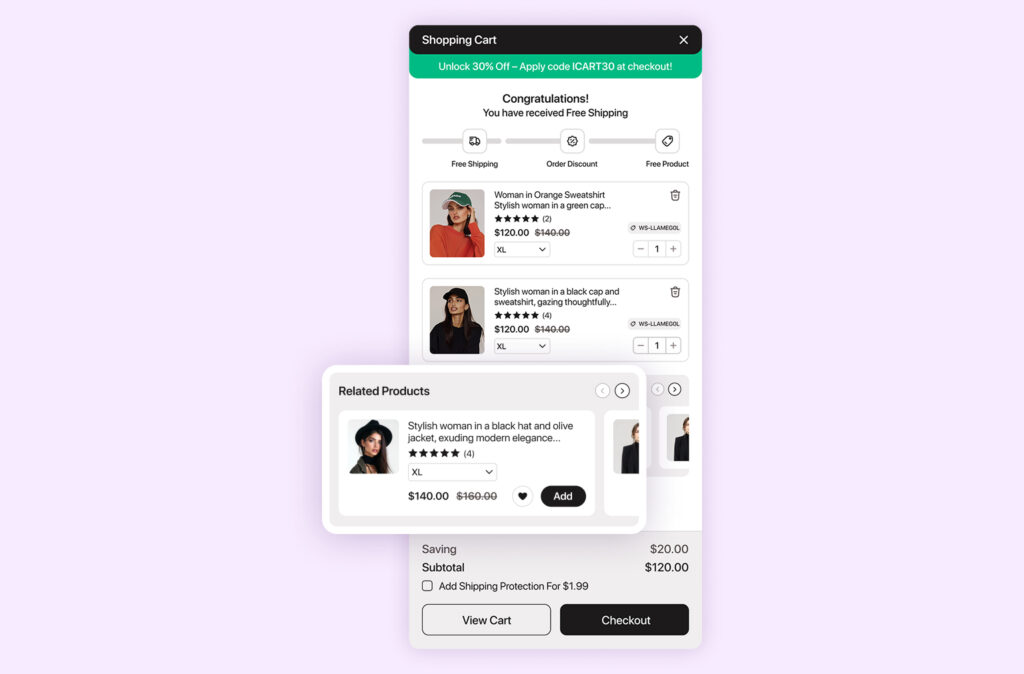
This is where a Shopify cart drawer app with built‑in Shopify cart drawer upsell features becomes critical:
- Instead of sending shoppers to a static cart page, open a slide‑out drawer on mobile and desktop.
- Inside that drawer, surface AI recommendations or rules‑based upsells (“Complete the look”, “Add gift wrap”, “Upgrade to bundle”) without interrupting the checkout path.
- Show progress bars for free shipping thresholds or bonus gift unlocks to encourage higher AOV.
- Keep copy concise and visual for mobile shoppers: short labels like “Complete the set” or “Add this for 20% off” paired with product thumbnails, prices, and mini-badges (“Popular”, “Gift Favorite”).
Pro tip: Assume most of your holiday shoppers will see your store in one hand while multitasking. Every extra tap you remove and every smart, well-placed offer you add can translate into a measurable lift in revenue.
Understand with Examples:
- A customer adds a sweater: your Shopify cart drawer upsell suggests matching scarf + gloves and shows them as a frequently bought together Shopify bundle with a small discount. Read on Top 7 Product Bundling Strategies for Shopify: Proven Tactics to Boost AOV and Conversions.
- Someone adds a main gift item: the cart drawer proposes product add-ons such as gift wrap, a card, or extended warranty in a clean, one‑tap interface.
By blending speed, clarity, and subtle upsell prompts in the cart drawer, you align perfectly with how holiday shoppers are actually buying on mobile this year.
4. Smart Shoppers, Smarter Value
Shoppers in Holiday 2026 are highly informed, discount-aware, and values-driven. They compare prices, check reviews, look at return policies, and plan purchases earlier in the season. They’re not just deal hunters; they’re value hunters who reward brands that are transparent and fair.
How to act on this trend with insights and AI recommendations on Shopify:
- Use Shopify customer insights to understand what your most price-sensitive and high-value segments buy, how often they return, and what creates repeat purchases. Reflect this in your bundles and offers.
- Build “smart value” bundles using frequently bought together Shopify logic—curate gift sets that combine complementary products at an honest, clearly communicated savings.
- Highlight reviews, ratings, and trust badges on PDPs and in your Shopify cart drawer app to reassure careful comparison shoppers before checkout.
- Create gift collections such as “Holiday Gifts Under $50” and “Best Value Bundles” and fuel them with recommendation app logic so the products shown adjust as demand shifts through the season.
Pro tip: Smart shoppers respond to clarity and credibility. Use your data to build bundles and experiences that feel like a smart use of their money, not a gimmick.
You can read How Shopify Cart Drawer App Makes Cart Customization Easy To Enhance AOV and Experience.
5. AI‑Powered Personalization & “Frequently Bought Together” Logic Everywhere
AI recommendations on Shopify are no longer a “nice to have” it’s actively shaping what shoppers see and buy. Reports suggest AI‑driven traffic and recommendation usage will surge this holiday, as consumers lean on smart tools to navigate the overwhelming number of deals and products. Shoppers want stores to “do the thinking” for them by surfacing relevant products, bundles, and add‑ons.
For Shopify merchants, that means:
- Product recommendation apps that use AI recommendations on Shopify to personalise results based on customer insights.
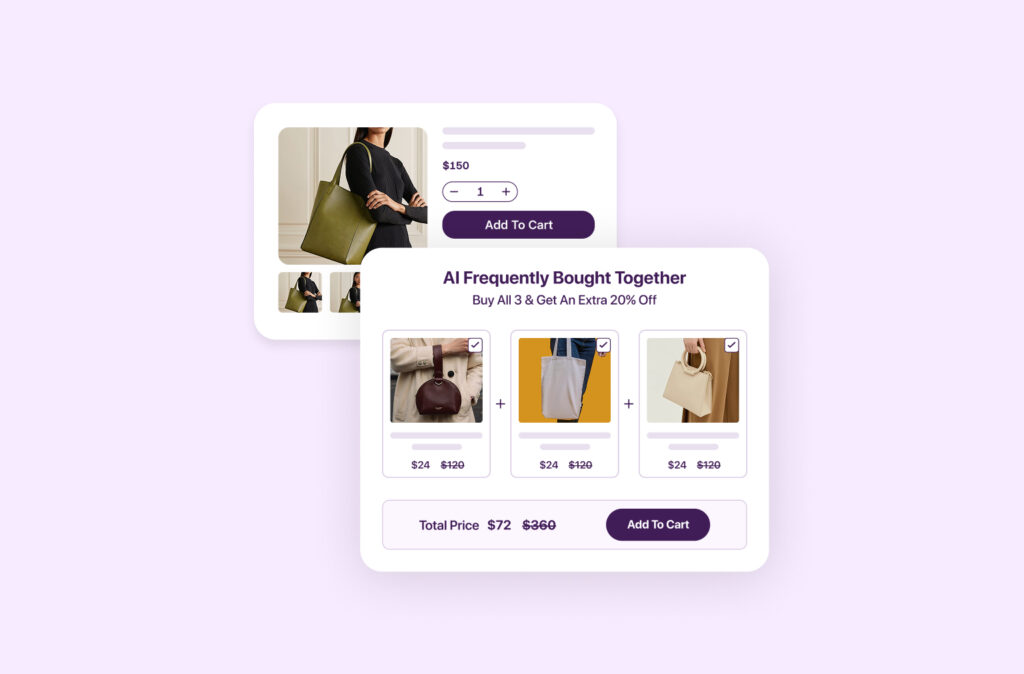
- “Frequently bought together Shopify” sections that feel curated, not random.
Where to place AI recommendations on Shopify:
- On product pages: show “Frequently bought together” and “You may also like” bundles informed by past orders and browsing patterns.
- In the cart drawer: surface complementary products that make sense for gifting (e.g., matching sets, accessories, refill items).
- On the post‑purchase page and in follow‑up emails: recommend add‑ons based on what the shopper just bought, using Shopify post-purchase offers and automations.
How to make AI recommendations on Shopify holiday‑specific:
- Use your Shopify customer insights to identify which items historically sell together in Q4 for example – candles + holders, toys + batteries, coffee + mugs.
- Create holiday‑themed bundles in your AI recommendations Shopify app and label them clearly (“Festive Bundle”, “Stocking Stuffer Set”).
The result: each touchpoint feels like a personal shopper suggesting the next best item exactly the kind of experience that wins when shoppers are pressed for time and overwhelmed by choices.
You can learn How to Choose the Right Shopify Product Bundles: Boost AOV with Best Shopify Bundle App.
6. Personalized Targeted Offers
Generic experiences are losing ground fast. Most consumers now expect brands to recognize them, remember their preferences, and tailor AI recommendations on Shopify accordingly. Shoppers are more likely to convert when they see products and offers that feel made for them and they get frustrated when they don’t.
How to act on this trend with a product recommendation app:
- Deploy personalized AI recommendations on Shopify stores throughout. By leveraging browsing behavior, past orders, and real-time cart data. Use your app to power “Just for you” sections on the homepage, PDPs, and within the cart drawer.
- Lean on frequently bought together Shopify widgets to showcase highly relevant add-ons based on actual purchase patterns (“Complete your gift with…”), not just generic upsells.
- Build segmented flows based on Shopify customer insights: new vs returning customers, high-LTV VIPs, gift buyers, and self-gifters. Then align your on-site recommendations and Shopify post-purchase offers with each group’s behavior.
- Use the thank-you page and post-purchase window to show hyper-relevant AI recommendations on Shopify stores like post-purchase offers driven by exactly what the customer just bought (refills, accessories, upgrades), instead of random bestsellers.
Remember, personalization isn’t just about using a name, it’s about showing the right product, at the right time, in the right place. Let your AI recommendations on Shopify engine and data do that work automatically.
Learn 10 tips to leverage shopify analytics for your ecommerce business.
7. Value‑Seeking Shoppers Want Smart Bundles, Not Just Discounts
Shoppers in 2026 are very value‑conscious, but they’re also willing to spend when offers feel smart think bundles, “buy the set”, and tiered rewards, rather than blanket discounts. Deloitte and other retail surveys show shoppers actively chasing deals and promotions, but also looking for convenience and perceived value in curated sets and recommendations.
This trend is ideal for upsell and recommendation apps because you can:
- Create strategic bundles powered by frequently bought together Shopify logic (e.g., “Gift Box: main product + add‑on + gift wrap at 15% off”).
- Use your Shopify cart drawer app to highlight benefits like “Save $X when you bundle these 3 items” instead of just slashing prices.
Practical implementations:
- Build “Holiday Essentials” and “Family Pack” bundles in your upsell tool and surface them wherever shoppers show strong purchase intent (PDP, cart drawer, and checkout).
- Use Shopify customer insights to identify your top 10 giftable products and pair each with 2–3 logical add‑ons; then automate those suggestions via frequently bought together sections.
- For higher‑ticket shoppers, offer tiered rewards: spend thresholds unlocking bonus gifts or exclusive products, communicated clearly in your cart drawer and header bars.
By focusing on intelligent value (more for what they’re already buying) instead of pure discounting, you protect margins while giving shoppers exactly the kind of deal‑experience they want this season.
Check out the beginner’s guide to implement AI powered Upsell App on their ecommerce store.
8. Post‑Purchase Is Not an Afterthought but a Core Revenue Channel
One of the biggest shifts in 2026 is how brands treat the post‑purchase moment. High‑volume holiday traffic makes it critical not just to acquire customers but to maximize the value of each order and build relationships that last into the new year. The thank‑you page and confirmation emails are no longer dead ends—they’re prime real estate for Shopify post-purchase offers and retention plays.
Key behaviors:
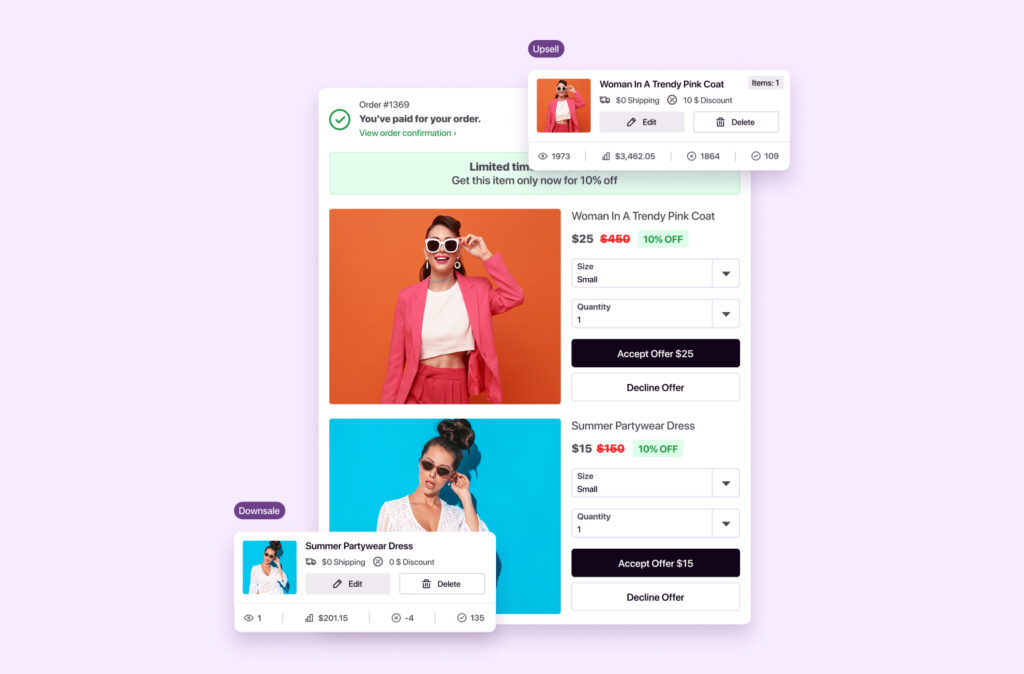
- Holiday shoppers are open to add‑ons right after checkout (think gift wrap, matching accessories, refills), especially if it’s a one‑click add to their just‑placed order.
- Many will buy again if you follow up within days or weeks with smart, personalized offers.
How to leverage Shopify post-purchase offers:
- Use a dedicated post‑purchase upsell flow to present 1–2 complementary items immediately after payment but before the final thank‑you page. These can be powered by frequently bought together Shopify logic or rules (e.g., “Bought sweater? Offer a scarf.”).
- Keep the UX frictionless: one‑click acceptance, no need to re‑enter payment details.
- Avoid overload—this isn’t the place for a catalog; it’s for one clear, compelling upgrade or add‑on.
Then, extend the post‑purchase journey:
- Within 2–5 days: send a thank‑you email with tailored recommendations and a small bounce‑back incentive for December purchases.
- After a few weeks: send care tips, user guides, or gift‑inspiration content featuring items related to their purchase, again powered by your Shopify customer insights and recommendation engine.
This approach turns your holiday surge into a pipeline of loyal, repeat buyers instead of one‑time bargain hunters.
Check out 10 common mistakes that online store owners make that can harm the growth of their ecommerce business.
9. Content-Driven, Story-Led Commerce
Shoppers don’t just stumble onto product pages anymore; they discover brands through content TikToks, Reels, gift guides, quizzes, reviews, and creator posts. Discovery and purchase are blending into one continuous journey where storytelling, social proof, and education matter as much as the discount.
How to act on this AI recommendations on Shopify trend within your store:
- Build gift guides and editorial-style landing pages (“Gifts for Him”, “Gifts for Cozy Nights In”) and connect these to your product recommendation app so blocks on the page update with real-time bestsellers and frequently bought together Shopify suggestions.
- Turn user-generated content and reviews into on-site modules that sit right next to recommended products, both on PDPs and within your cart drawer. This pairs social proof with personalized suggestions, boosting confidence and AOV.
- Use quizzes and interactive content to capture preferences and then feed the results into your recommendation engine, so future on-site experiences, cart drawer upsells, and Shopify post-purchase offers all reflect the shopper’s answers.
- Make content shoppable embed “Add to cart” or “Shop the look” recommendations under your holiday blog posts, lookbooks, and landing pages.
Pro tip: Treat every piece of content as both a story and a doorway to a curated product set. Your recommendation app is what turns that doorway into a clear, guided path to purchase.
10. Maintain Post-Holiday Momentum
The holiday season doesn’t end in December, it evolves. Gift card redemptions, returns, and self-gifting make January a high-value month as well. Stay active while competitors pause to lock in loyalty and Q1 revenue.
How to Act on This Trend:
- Target gift card holders right after Christmas – Send follow-ups with personalized “Your perfect first purchase” guides via Shopify customer insights, plus bonus credit (“Spend $50, get $10 extra”). Suggest frequently bought together Shopify bundles to nudge first buys.
- Shift to self-gifting language. Use a copy like: “You made everyone else happy, now it’s your turn.” Tailor emails and banners with Shopify customer insights for self-care items. Add Shopify cart drawer upsell prompts for returning visitors.
- Turn returns into upsell moments – Offer store credit bonuses and “You might like this instead” suggestions powered by your recommendation app. Use Shopify post-purchase offers logic for frequently bought together Shopify alternatives.
- Launch “New Year, New You” collections – Curate wellness/self-care drops. Promote via segmented emails using Shopify customer insights. Highlight bundle deals in Shopify cart drawer upsell—ideal for beauty/fitness brands.
- Segment and run win-back email flows – Re-engage with “Still thinking about this?” nudges based on Shopify customer insights. Include frequently bought together Shopify bundles and post-purchase offers data for tailored incentives.
- Recap loyalty rewards – Send reminders: “You earned 250 points—redeem for $15 off.” Pair with Shopify cart drawer upsell for frequently bought together Shopify bundles to drive retention.
- Offer subscription/refill nudges – Message: “Loved your gift? Get it monthly.” Suggest subscription bundles via recommendation app and Shopify cart drawer upsell for easy ads.
Pro Tip: Use Shopify customer insights and your recommendation app to convert holiday traffic into lifetime value via targeted post-purchase offers, cart drawer upsells, and frequently bought together Shopify bundles.
Read on how to deliver an intelligent shopping experience to customers and pull up conversions for your business.
Your 2026 Holiday Playbook
To harness these trends for your Shopify store, tie your stack together around three pillars: data, personalization, and placement.
- Data: Deepen Shopify customer insights –
- Analyze last year’s BFCM and Christmas performance to identify top products, best bundles, and key segments.
- Use that data to power all your recommendation logic and offer rules this year.
- Personalization: Use the right app features –
- Deploy frequently bought together Shopify widgets on product pages, the cart drawer, and post‑purchase pages.
- Let AI or rules surface bundles and add‑ons that align with each shopper’s cart and browsing history.
- Customize messaging for early‑season vs. last‑minute shoppers where possible.
- Placement: Optimize every stage of the funnel
- Discovery & PDP: Personalized recommendations and frequently bought together sections.
- Cart: A responsive Shopify cart drawer app with embedded Shopify cart drawer upsell prompts and progress bars.
- Checkout & post‑purchase: Focused Shopify post-purchase offers that add incremental revenue without risking abandonment.
- Retention: Follow‑up sequences that use Shopify customer insights to drive January and beyond.
If you execute on these foundations, and align with these ten trends of AI recommendations on Shopify stores you can define Christmas 2026 and the holiday season. Done right, your product recommendation app and upsell tools becomes the engine that supports your strategy to turn holiday traffic into profitable, long‑term relationships.