
Contents
You just made a sale — and that’s worth celebrating. But the moment right after checkout is one of the most under leveraged opportunities in eCommerce. The customer’s payment is processed, their trust in your brand is at its peak, and their buying intent hasn’t faded yet. Most store owners send them straight to a thank you page and move on.
THAT’S REVENUE YOU ARE LEAVING BEHIND – EVERY SINGLE DAY
Post purchase upsell strategies, when done right, can seriously move the needle on your average order value without touching your conversion rate at all. And that last part? That’s the part people don’t talk about enough.
Let us break this whole thing down- what it is, why it works and exactly how to do it in a way that does not feel pushy or weird.
Key Takeaways
- The best time to upsell is right after the purchase – buyer intent is at its peak and the original sale is already secured
- One-click acceptance is non-negotiable – if they have to re-enter payment info, most customers won’t bother
- Relevance beats discounts – a well-matched product offer converts better than a generic discount every single time
- Post purchase upsells don’t hurt conversion rates – unlike pre-checkout pop-ups, there’s nothing to lose
- It’s about more than AOV – done right, post purchase upsells improve customer lifetime value, product discovery and loyalty
- Data should drive your offers – let purchase patterns tell you what to show, not gut instinct
- Test constantly – small tweaks to copy, product choice and pricing can double your take rate
What is a Post-Purchase Upsell? (And How Is It Different From Regular Upselling)
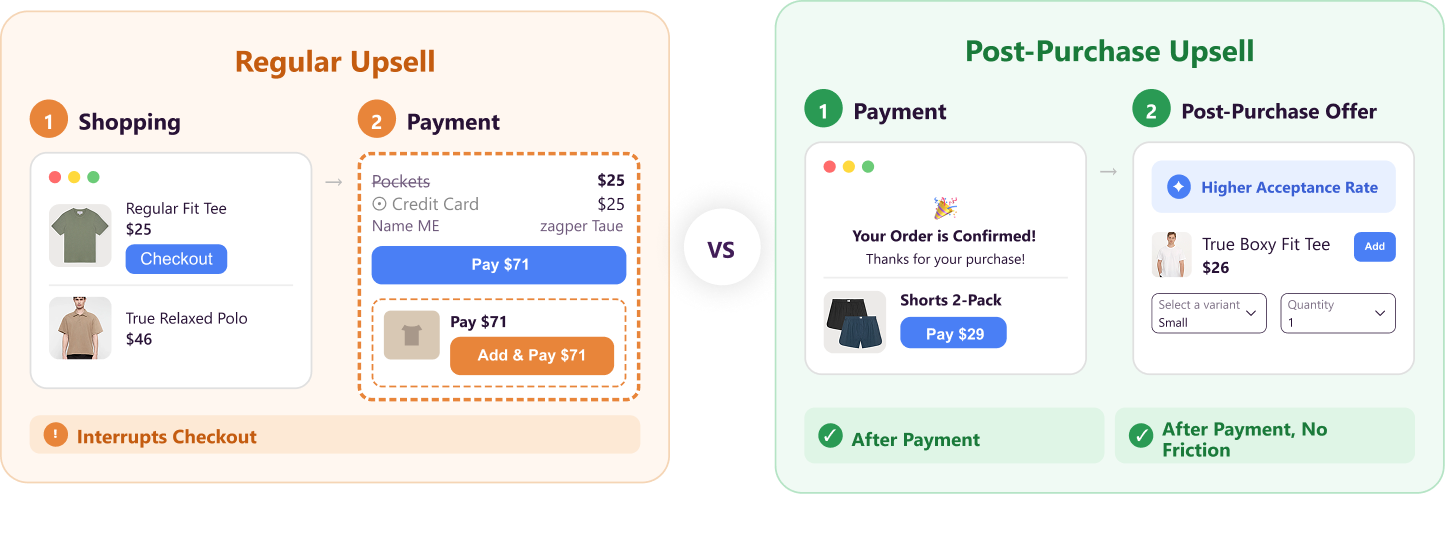
A post purchase upsell is an offer you make or show to customers after they have placed their order, right before they land on the final thank you page. It could be a related product, a subscription upgrade, a bundle add-on or even a “buy two, gift one” deal.
Here is the thing, this is not the same as throwing a pop-up in someone’s face when they are about to checkout. That can kill conversions. Post-purchase offers are shown after the payment has already been processed. So you are not risking the original sale at all.
The customer still gets their order either way. You are just giving them a chance to add something extra with literally one click, no re-entering payment info, no extra steps. That’s the magic of it!
Upsell vs. Cross-Sell – What’s the Real Difference?
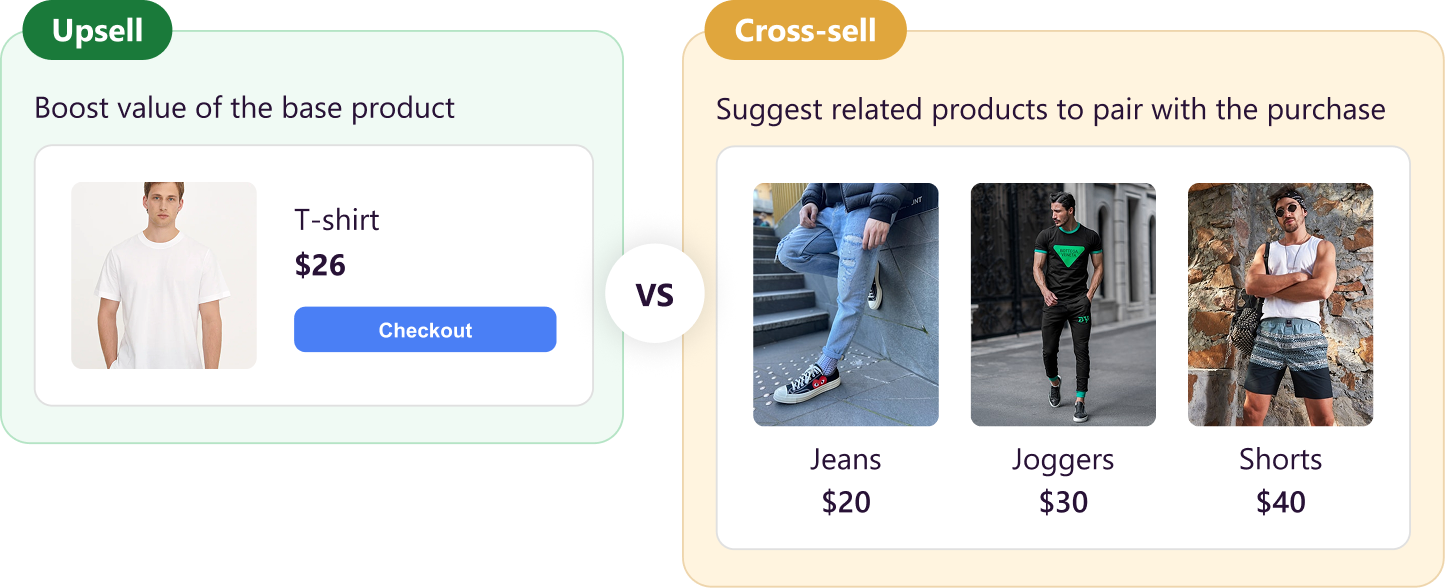
These two terms get used interchangeably, but they mean different things and serve different purposes.
- Upsell: Encouraging the customer to buy a bigger, better or upgraded version of what they just ordered. Example… they bought the 2oz skincare serum, you offer the 4oz bottle at a slight per-unit saving.
- Cross-sell: Offering a complementary product that pairs logically with what they just bought. Example, they bought a camera, you offer a memory card or a carrying case.
In the post purchase window, cross-sells tend to feel less aggressive because you are not asking someone to second-guess what they just bought, you are just saying “here’s something that goes great with it.”
The most sophisticated post purchase flows actually use both: lead with an upsell, and if the customer declines, offer a softer, lower-priced cross-sell as a downsell. That way you are capturing value at every step of the funnel.
It’s Not Just About AOV
Here is the thing most people don’t talk about. Post purchase upsells increase average order value. That’s the obvious win, but the deeper benefits are actually more interesting-
- Higher profit margins– you have already paid to acquire this customer. The upsell has no acquisition cost, so the margin is much better than your regular sales.
- Improved product discovery– customers often don’t know the full breadth of your catalog. This is a low-pressure way to introduce them to more of what you offer.
- Stronger customer lifetime value (LTV)– customers who buy more across multiple products tend to stick around longer and return more often.
- Better brand experience– a relevant, helpful upsell doesn’t feel like a sale pitch. It feels like good service.
Why the Post Purchase Moment Is So Powerful
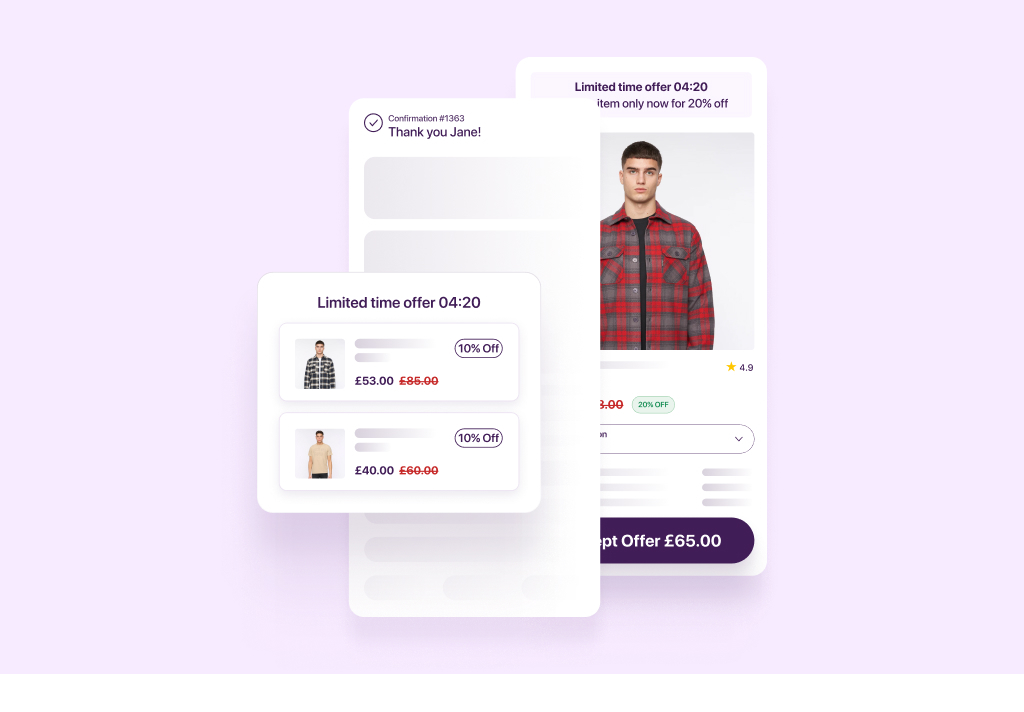
Let me explain why timing matters so much here. When someone is browsing your store, they are still making up their mind. They are comparing, they are hesitating and they might have four other tabs open. That is a tough mental state to upsell into.
But the moment right after checkout? That is completely different. The customer has already committed. They have said yes to your brand and that decision creates what psychologists call post-purchase rationalization, a natural mental tendency to feel good about what you just bought and want to lean further into it.
There’s also the trust factor. They have just given you their credit card. They have trusted you with an order. That trust is at its absolute peak right now and it fades over time.
And practically speaking, they are still sitting there on your website. Their attention is yours for another 30-60 seconds. Don’t waste it.
Compare this to trying to upsell someone via email three days later. Their excitement has faded. The moment has passed. That’s why post purchase upsell conversion rates consistently outperform follow-up email campaigns for the same products.
The Structure of a High-Converting Post Purchase Upsell Funnel
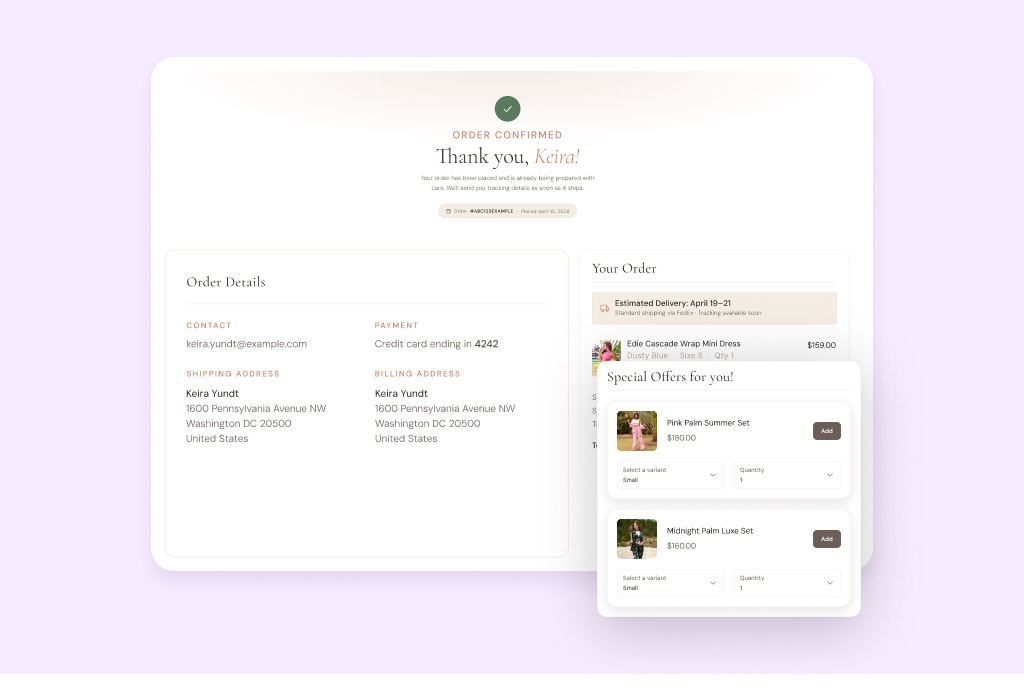
Most stores approach this the wrong way, they just throw up a product recommendation and hope for the best. The stores that actually convert have a flow, not just an offer. Here’s how it’s structured:
- The Trigger – Right After “Order Confirmed”
The moment the customer sees their order confirmation, your upsell fires. Not before, not on the cart page, right here. The primary sale is secured and now you have the customer’s full, satisfied attention.
2. The Primary Upsell Offer
This is your best shot. It should be-
- Highly relevant to what they just bought (not just a bestseller list)
- Priced reasonably relative to the original order, an upsell that’s 3x the original purchase price rarely converts
- One-click to accept is non-negotiable
- Framed as exclusive, as the offer is “only available right now,” is not manipulative if the offer is actually real
3. The Downsell (If They Decline)
Most stores skip this. Don’t.
If a customer clicks “No thanks” on the primary upsell, show them a softer alternative, a smaller product, a lower price point or a complementary item instead of an upgrade. You still capture value and the customer doesn’t feel like they just hit a dead end.
4. The Thank You Page
After the upsell flow is done (whether they accepted or not), they land on the thank you page. This is still valuable real estate. Use it for-
- Personalized product recommendations for their next visit
- Loyalty program enrollment
- Review requests
- Referral prompts
The post purchase experience does not end at the upsell popup, it extends through every touch point after the order.
Best Post Purchase Upsell Strategies to Increase AOV
Knowing what a post purchase upsell is and when to show it is one thing. Knowing how to build an offer that actually gets accepted, that’s where most stores have real room to improve.
Now let’s get into the actual tactics. These are the strategies that move numbers.
- Let Your Data Tell You What to Offer–
Most people do not realize this, but the best upsell ideas do not come from instinct, they come from your own order history. Go into your analytics and look for products that appear together across multiple orders. What are customers already buying in combination? Those natural purchase pairs are your highest-probability upsell combinations. You are not guessing what people might want, you are showing them what people like.
If your store runs on Shopify, tools like Wiser AI analyze this purchase behavior automatically and use it to power your post purchase recommendations in real time, with no manual rules to configure.
2. Segment Your Offers by Customer Type
A first-time buyer and a repeat customer are in completely different mental spaces when they hit your post purchase page and they should see different offers.
A first-time buyer is still getting to know your brand. A low-priced, complementary product is a natural next step, not a big commitment ask. A loyal customer who’s ordered from you three times before is a better candidate for a premium upgrade or a subscription conversion. They already trust you. Start simple if segmentation feels overwhelming, even splitting your offers between new and returning customers will make a measurable difference.
3. Make It Feel Personal, Not Automated
Generic offers feel like spam. Specific offers feel like service. There’s a big difference between, “You might also like this product” and “Since you just picked up the Matte Lip Set, most customers also grab the matching Lip Liner, here’s why they love it together.”
The second one references what the customer just bought, explains the connection and signals that the recommendation was made for them, not pulled from a generic list. Use the customer’s name if your platform supports it. Reference the specific product they ordered. The more it feels like a personal recommendation, the more it converts.
4. Keep the Offer Visually Simple and Instantly Clear
A customer should be able to understand your upsell offer, the product, the price, the benefit, the CTA… in under five seconds. If they have to read carefully to figure out what you are offering, you have already lost most of them.
The winning formula is simple, a clean product image, one clear headline that states the benefit, a price that’s easy to see and a single buying button. Something like “Add to My Order $19.99” beats “Learn More” or “Shop Now” every time because it tells the customer exactly what happens when they click. Clutter is the enemy. Resist the urge to add paragraphs of copy.
5. Price the Upsell Proportionally
This one gets overlooked a lot. The price of your upsell offer matters relative to what the customer just spent, not just in absolute terms.
If someone just bought a $35 product, asking them to add a $75 upsell feels heavy. But asking them to add a $12-$18 item feels easy. A rough guideline, keep the upsell at 25-50% of the original order value for best results. Beyond that, the cognitive weight of the decision starts to work against you.
Pairing a reasonable price with a small discount, even 10-15% framed as exclusive can push hesitant customers over the line without you having to slash margins.
6. Design for Mobile First, Not as an Afterthought
Most Shopify stores get more than half their traffic from mobile devices. Yet a surprising number of post purchase upsell pages are clearly designed on desktop and barely tested on a phone.
Big tap targets. Short, punchy copy. Product image that loads fast. A single full-width CTA button. Scroll-free layout where possible. These aren’t nice-to-haves, they are the difference between a broken mobile experience that converts at 2% and a clean one that hits 15%.
Always run through the full post purchase flow on at least two different mobile screen sizes before going live.
7. Add Social Proof Directly Into the Upsell Widget
Most people do not realize this makes a measurable difference. If you can show a 4- or 5-star review (real one, from a real customer) right next to the upsell product, hesitation drops noticeably.
Something like,
⭐⭐⭐⭐⭐ “I always order this with my main purchase, honestly makes the whole thing so much better.” The customer doesn’t have to wonder if the add-on is worth it. Someone like them has already answered that question.
8. A/B Test Relentlessly and Test One Thing at a Time
The first version of your upsell offer is almost never the best version. The brands that squeeze the most out of post purchase upsells are the ones that treat it like a continuous optimization process, not a set-and-forget setup.
Test one variable at a time, the product being offered, the price point, the headline copy, the button text, the layout, the discount size. Changing multiple things at once makes it impossible to know what actually moved the needle. Give each test enough time and traffic to be statistically meaningful, usually at least a couple of weeks. Then keep the winner, drop the loser and start the next test.
Best Tool for Post Purchase Upsells on Shopify
The tool you use matters a lot, not just for functionality but for how seamlessly the offer integrates with your checkout experience.
Wiser AI is a Shopify upsell and recommendations app built to power intelligent product suggestions at every stage of the customer journey, including post purchase and thank you page.
What makes it different from most tools is that it doesn’t rely on static “also bought” rules. It tracks individual browsing behavior and purchase history to show each customer the products most likely to be relevant to them. The post-purchase upsell feature fires right after checkout, the thank-you page recommendations keep serving value after the upsell, and the whole system, cart upsells, checkout upsells, email recommendations, smart popups and frequently bought together widgets run from one platform.
It’s used by global brands like Netflix Shop, BBC Shop and Philips, supports Shopify Plus, and comes with a 14-day free trial. If personalization and automation matter to you (and they should), this is the tool worth evaluating first.
How to Measure If Your Post Purchase Upsell Strategy Is Actually Working
Running a post purchase upsell without tracking performance is like driving with your eyes closed. Here are the metrics that matter and what they are actually telling you.
- Check Upsell Conversion Rate
This is your most important number. It tells you what percentage of customers who saw your upsell actually accepted it. A baseline of 10–15% is solid. Above 20% means your offer is highly relevant and well-presented. Below 5%? The product, the price or the copy needs work.
2. Average Order Value (AOV) Lift
Compare the AOV of orders that include an accepted upsell vs. orders that don’t. The difference is your AOV lift. Track this monthly to see if it’s trending up.
3. Revenue Generated From Upsells
Track total gross revenue coming directly from accepted post purchase offers. This gives you a clear picture of how much the strategy is adding to your bottom line in real dollars.
4. Customer Lifetime Value (LTV) by Segment
This one takes longer to measure but is arguably the most important. Do customers who accept a post purchase upsell have higher LTV than those who don’t? In most cases, the answer is yes, because buying more products from you means they’re more invested in your brand. If your data shows this pattern, it’s a strong signal to invest more heavily in the strategy.
5. Downsell Acceptance Rate
If you have a downsell after a declined primary upsell, track its acceptance rate separately. This tells you whether your fallback offer is well-calibrated.
6. A/B Test Results
Don’t just run one version of your upsell offer and assume it’s optimal. Test different products, different price points, different copy angles, different layouts. Let the data tell you what to keep.
Common Post Purchase Upsell Mistakes to Avoid
Even good strategies can backfire when executed poorly. Here’s what to watch out for-
- Showing irrelevant products. This is the #1 mistake. If the upsell doesn’t logically connect to what was just purchased, customers feel like they are being sold to, not helped. Relevance is everything.
- Too much friction. Any extra steps beyond one click will tank your take rate. If your current setup requires re-entering payment details, that’s a technical problem that needs fixing before anything else.
- Misleading urgency. Fake countdown timers that reset on every page load are noticed and they destroy trust. If your offer is genuinely time-limited, say so clearly. If it’s not, don’t pretend.
- No mobile optimization. More than half your customers are on mobile. If your upsell page looks clunky or hard to interact with on a small screen, you are losing those conversions entirely. Always test on mobile before going live.
- Offering something too expensive. The upsell should feel like a small, easy addition, not a second big commitment. As a rough guide, the upsell should not exceed 50-60% of the original order value. Beyond that, the ask feels too heavy right after checkout.
- Ignoring the data. If you are not reviewing the data, you don’t know what’s working. Set a recurring review and cut offers that consistently underperform.
Real-World Post Purchase Upsell Examples by Industry
Let’s look at some examples that can help you understand the whole post purchase concept better.
- Fashion and Apparel – “Complete the Look”
A customer buys a linen button-down shirt. The post purchase offer: “Complete the look, add the matching shorts for $15 only.”
This works because the offer makes logical style sense. The customer already trusts your aesthetic since they just bought from you. Adding a coordinated item feels like styling advice, not a sales pitch.
2. Beauty and Skincare – “Build the Routine”
Customer buys a facial cleanser. Post purchase offer- “Most skincare routines pair this with our toner. Add it for $18 – 20% off your first bottle.”
This is effective because skincare inherently involves multiple steps. You are helping the customer get the full result, not just trying to sell them more stuff.
3. Coffee and Food – The Subscription Pitch
Customer buys a 250g bag of single-origin coffee. Post purchase offer- “Never run out-subscribe and get this coffee delivered monthly for 15% less. Cancel anytime.”
This is one of the highest-performing post purchase funnels in DTC. The customer clearly loves the product, they just bought it. Converting them to a subscriber right here, at this moment, is far more effective than any email campaign you will send a week later.
Frequently Asked Questions: Post Purchase Upsell
1. Does a post purchase upsell affect my conversion rate?
No!! That’s actually one of the biggest advantages. Since the original purchase is already complete, accepting or declining the upsell offer has zero impact on your main checkout conversion rate.
2. How do I increase AOV with post purchase upsells?
Focus on relevance first. Show products that genuinely complement what the customer just bought. Use one-click acceptance, add social proof and test different offers regularly. A subscription upsell is also one of the fastest ways to lift AOV and LTV at the same time.
3. What should I put on my thank you page for upsells?
Your thank you page should include a clear, benefit-led upsell offer above the fold, a short customer review or social proof, a visible “no thanks” option and ideally a timer or exclusivity element to add a little urgency. Keep it clean and don’t overload it.
4. What’s a good acceptance rate for a post purchase upsell?
Anything above 10% is a good starting point. Well-optimized, highly relevant offers can hit 20-30%. If you’re below 5%, the offer likely is not relevant enough or the presentation needs work.
5. Do post purchase upsells work on mobile?
Yes… but only if your upsell widget is properly optimized for mobile. A surprising number of stores lose upsell revenue because their post purchase pages look broken or cluttered on smaller screens. Always test on mobile before going live.
6. Do I need to offer a discount on the upsell?
Not always. Relevance and convenience are more important than price. That said, a 10-15% discount, especially framed as exclusive can meaningfully boost acceptance rates and makes the offer feel more special.
7. How do I optimize my thank you page for upsells?
Put the offer above the fold, use benefit-focused copy, include a real customer review next to the product add urgency only if it’s genuine, include a clear “No thanks” option, and keep the page clean. One strong offer beats a cluttered page every time.
